Life Happens in an Elevator in an Elevator in an Elevator

- Home
- About Us
- Products/Services
By Industry
Service & Modernisation
- Architects & Designers
- By Industry
- Blogs
- Contact Us
Passenger Elevator: Powering Efficient Vertical Mobility in Modern Buildings
As modern cities grow vertically, the need for reliable vertical transportation has become essential. From residential towers and office complexes to hospitals and commercial buildings, elevators play a vital role in ensuring efficient movement within buildings.
Today, elevators are far more than simple lifting machines. They are advanced systems engineered with precision technology, safety mechanisms, and intelligent control systems that support the functionality and accessibility of modern infrastructure.
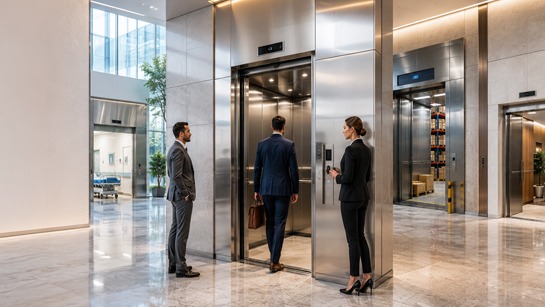
Among the many types of lifts available today, passenger elevators are the most widely installed systems because they are specifically designed to transport people safely, efficiently, and comfortably across multiple floors.
Companies like EASA Elevators continue to shape the future of vertical mobility by designing elevators that combine innovation, safety, and performance for residential and commercial buildings.
Understanding Elevators
An elevator is a vertical transportation system used to move people or goods between different levels of a building. The system typically consists of a cabin that travels along guide rails within a shaft, powered by a mechanical lifting system and controlled by electronic systems.
Modern elevator systems include several essential components:
- Elevator cabin
- Hoisting system
- Control panel and microprocessor system
- Guide rails
- Safety and braking mechanisms
These systems work together to ensure smooth movement, accurate floor alignment, and safe operation throughout daily use.
Elevators are installed in various types of buildings, including:
- Residential apartments and housing complexes
- Corporate offices and commercial buildings
- Hospitals and healthcare facilities
- Shopping malls and hotels
- Industrial and manufacturing facilities
As buildings become taller and more complex, efficient vertical mobility becomes critical to maintaining comfort, productivity, and accessibility.
What Is a Passenger Elevator?
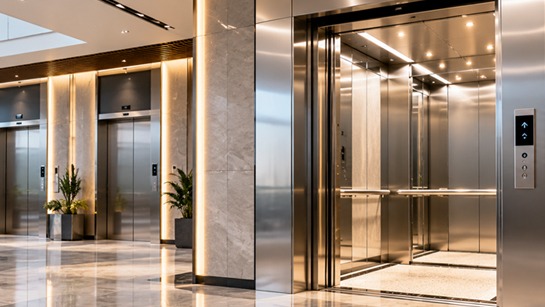
A passenger elevator is a lift designed specifically to transport people between floors in a building. These elevators are engineered to provide a smooth ride, safe operation, and efficient handling of passenger traffic throughout the day.
Passenger elevators are commonly installed in:
- Residential high-rise buildings
- Office towers
- Hotels and hospitality spaces
- Hospitals and healthcare facilities
- Retail centres and shopping malls
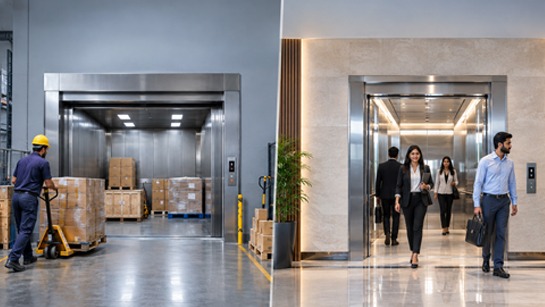
Unlike freight elevators that carry goods or heavy equipment, passenger elevators focus on comfort, ride quality, safety, and design aesthetics.
Modern passenger elevators are also equipped with intelligent control systems that help manage traffic efficiently and ensure consistent performance even during peak hours.
Key Features of Modern Passenger Elevators
Advancements in engineering and technology have significantly improved the performance and efficiency of passenger elevators.
Smooth and Comfortable Ride
Modern passenger elevators use advanced traction and gearless drive systems that minimize vibration and noise while ensuring smooth travel between floors.
Accurate floor levelling and controlled acceleration provide passengers with a comfortable and stable ride.
Advanced Safety Systems
Safety is one of the most important aspects of elevator design. Passenger elevators are equipped with multiple safety mechanisms that protect occupants during operation.
Common safety features include:
- Overload protection systems
- Emergency alarm and communication systems
- Automatic rescue devices during a power failure
- Door safety sensors to prevent obstruction accidents
- Emergency lighting systems
These systems ensure safe and reliable operation under both normal and emergency conditions.
Energy-Efficient Technology
Energy efficiency is becoming increasingly important in modern buildings. Passenger elevators today are designed with technologies that reduce power consumption while maintaining performance.
Some of these technologies include:
- Gearless traction machines
- Regenerative drives that recover unused energy
- Energy-efficient lighting and standby systems
These features help reduce operational costs while supporting sustainable building practices.
Customizable Cabin Design
Passenger elevators also contribute to the interior experience of a building. Cabin interiors can be customized using different materials, finishes, lighting systems, and control panels.
This allows architects and developers to design elevators that complement the overall architectural style and interior aesthetics of the building.
Types of Passenger Elevators
Passenger elevators can be configured in different ways depending on the building structure, passenger traffic, and space availability.
Machine Room Elevators
Traditional elevators use a separate machine room that houses the motor, controller, and other mechanical components. These systems are commonly used in many commercial buildings.
Machine Room-Less Elevators
Machine Room-Less (MRL) elevators eliminate the need for a separate machine room by integrating the machinery within the elevator shaft. This design helps save space and is widely used in modern buildings.
High-Speed Passenger Elevators
High-rise buildings often require high-speed elevators to transport passengers quickly between floors. These elevators are engineered to travel faster while maintaining comfort and safety.
Benefits of Passenger Elevators in Modern Buildings
Passenger elevators offer several important advantages that improve the overall functionality of buildings.
Improved Accessibility: Elevators make buildings accessible to everyone, including elderly individuals, people with mobility challenges, and families with children.
They ensure that every floor can be reached easily without relying solely on staircases.
Efficient Movement Within Buildings: Passenger elevators help manage the movement of people within large buildings by reducing congestion and improving traffic flow.
This is particularly important in offices, hospitals, and commercial complexes where efficient movement is essential.
Increased Property Value: Buildings equipped with reliable and modern elevator systems are more attractive to tenants, buyers, and investors.
Elevators improve the usability and convenience of the building, which contributes to higher property value.
Enhanced User Experience: A well-designed passenger elevator system improves the daily experience of residents, employees, and visitors by providing safe and efficient vertical transportation.
Passenger Elevators by EASA Elevators
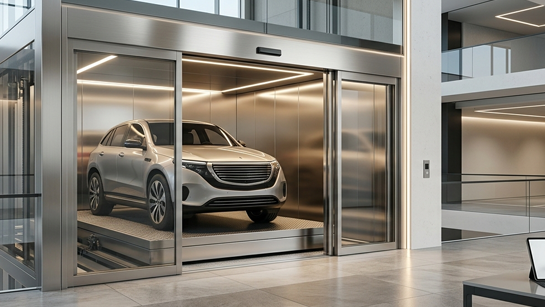
Established in 1996, EASA Elevators has become a trusted name in elevator design, manufacturing, installation, and maintenance across India. The company provides a wide range of elevator solutions including passenger elevators, freight elevators, automobile elevators, and dumbwaiters.
With a modern manufacturing facility in Khushkhera, Rajasthan and a strong service presence across multiple regions in India, the company focuses on delivering reliable elevator systems for residential, commercial, and industrial buildings.
EASA passenger elevators are designed with a focus on:
- Safety and reliability
- Smooth ride quality
- Energy-efficient performance
- Custom design solutions for different building types
By combining advanced engineering with strong safety standards, the company continues to provide elevator solutions that support modern architecture and infrastructure.
Conclusion
Elevators are an essential component of modern buildings, enabling efficient and safe vertical transportation. Among the different types available today, passenger elevators remain the most widely used because they are designed specifically for transporting people comfortably and reliably.
With innovations in safety systems, energy efficiency, and design customization, passenger elevators continue to evolve alongside modern building architecture.
By choosing advanced elevator solutions from experienced manufacturers such as EASA Elevators, building owners and developers can ensure safe, efficient, and long-lasting vertical mobility for their projects.