Life Happens in an Elevator in an Elevator in an Elevator

- Home
- About Us
- Products/Services
By Industry
Service & Modernisation
- Architects & Designers
- By Industry
- Blogs
- Contact Us
Elevators: Types, Benefits, Safety & How to Choose the Right Elevator
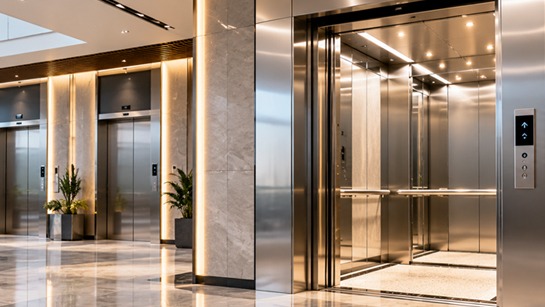
Elevators have become an essential part of modern buildings, moving people and goods faster, more safely, and more conveniently. From residential homes and apartments to offices, hotels, hospitals, and commercial buildings, the right elevator can significantly improve accessibility and the overall functionality of a property.
With different types of elevators and lifts available today, selecting the right solution requires an understanding of the building, expected usage, capacity, available space, safety requirements, and long-term maintenance needs.
Whether you are looking for a home elevator for a private residence, a passenger elevator for a commercial building, or a dumbwaiter for transporting goods, the right choice can make everyday movement more efficient and comfortable.
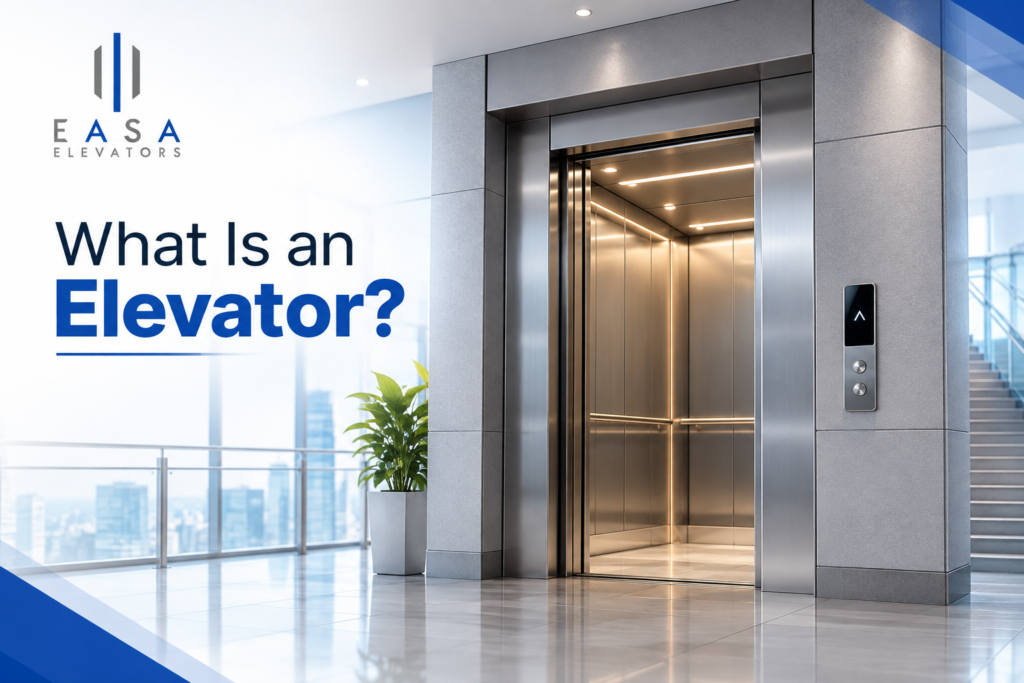
What Is an Elevator?
An elevator is a mechanical transportation system designed to move people or goods vertically between different levels of a building. It operates through a combination of mechanical, electrical, and safety systems that work together to provide controlled and reliable vertical transportation.
A typical elevator system includes several important components, such as:
- Guide rails
- Doors and door operators
- Control system
- Hoisting mechanism
- Braking and safety systems
- Electrical components
- Emergency communication and rescue systems
The terms elevator and lift are often used interchangeably. While terminology can vary by region, both generally refer to systems designed to transport passengers or materials between floors.
Why Are Elevators Important in Modern Buildings?
As buildings become taller and more space-efficient, elevators play an increasingly important role in making them accessible and practical.
1. Improved Accessibility
Elevators provide convenient access to different floors for people of all age groups and mobility levels. They are particularly useful for elderly individuals, people with mobility challenges, and families living in multi-storey homes.
2. Faster Vertical Transportation
Using stairs can become difficult and time-consuming in multi-storey buildings. Elevators provide a quick and convenient way to move between floors, particularly in buildings with high foot traffic.
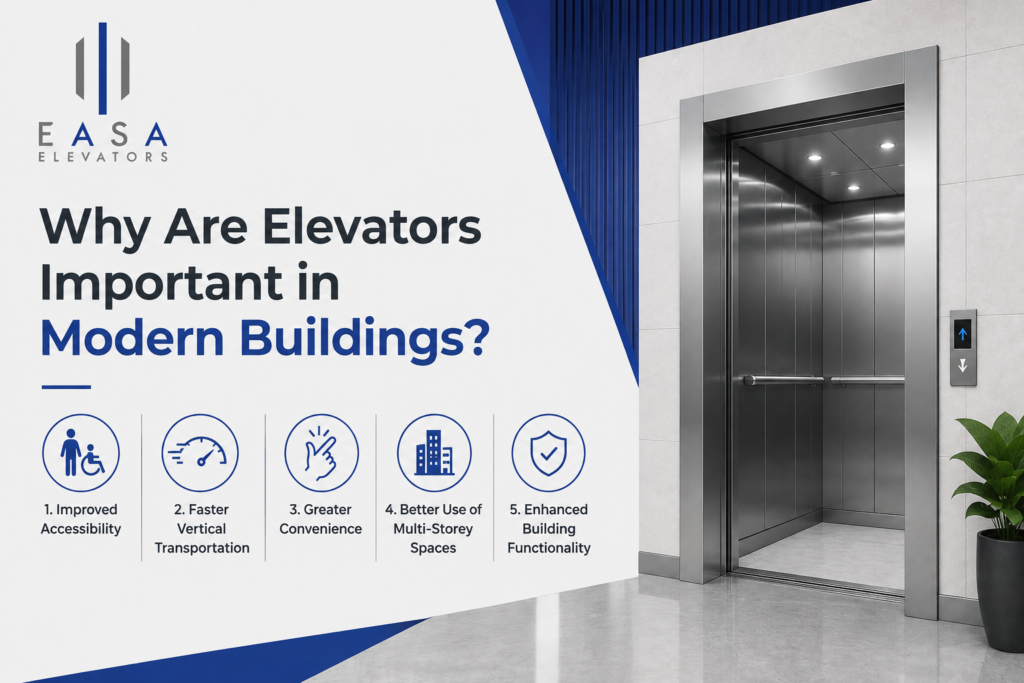
3. Greater Convenience
In homes, offices, hotels, hospitals, and commercial buildings, elevators make everyday movement easier. They can also reduce the physical effort involved in carrying luggage, equipment, or other items between floors.
4. Better Use of Multi-Storey Spaces
Elevators make multi-level properties more practical by providing convenient access to every floor. This allows building owners to use vertical space more effectively.
5. Enhanced Building Functionality
A well-designed elevator system can improve the overall usability of a property. In residential buildings, it adds convenience, while in commercial properties it can support smoother movement of employees, visitors, and customers.
Types of Elevators
Different buildings have different requirements. As a result, elevators are available in various configurations and capacities to suit specific applications.
1. Home Elevator
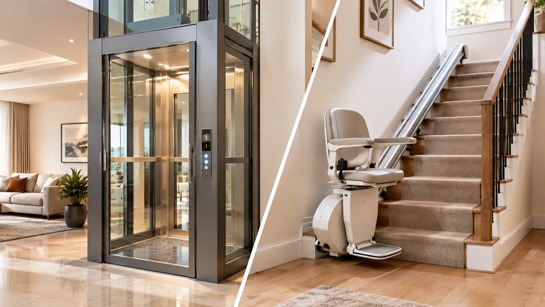
A home elevator is designed specifically for residential properties such as independent houses, villas, and multi-level residences.
Unlike elevators designed for large commercial buildings, home elevators can be selected according to the space, architectural design, and usage requirements of a private residence.
Some of the key benefits include:
- Convenient movement between floors
- Improved accessibility
- Comfortable transportation within the home
- Solutions designed for residential spaces
- Ability to complement the interior and architecture of the property
For homeowners, selecting a home elevator is not only about convenience. Factors such as available space, number of floors, capacity, safety features, design, and maintenance should also be considered.
3. Dumbwaiter Elevator
A dumbwaiter elevator is a compact lifting system designed to transport smaller goods, materials, food, or other items between floors.
Unlike passenger elevators, dumbwaiters are not intended for carrying people. They are particularly useful in places where materials need to be moved frequently between different levels.
Common applications include:
- Restaurants
- Hotels
- Commercial kitchens
- Hospitals
- Large residences
- Offices
- Retail and service establishments
For example, a restaurant with a kitchen on one floor and a dining area on another can use a dumbwaiter to move food, dishes, or other supplies efficiently. This reduces the need for staff to repeatedly use stairs while carrying items.
2. Passenger Elevator
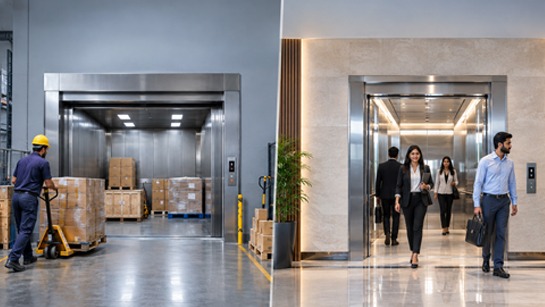
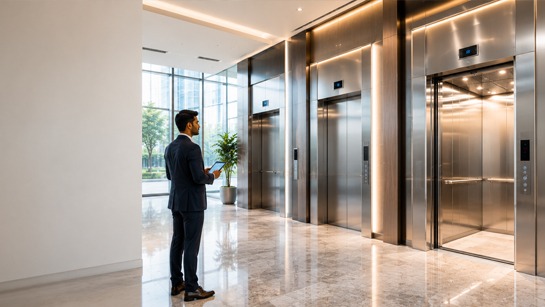
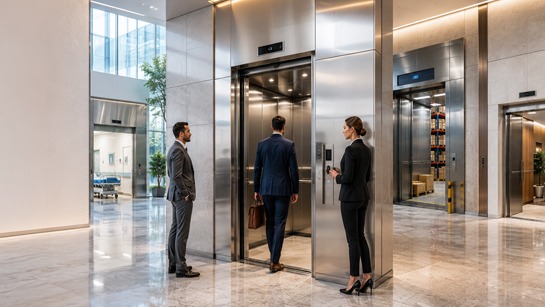
A passenger elevator is primarily designed to transport people between different floors. These elevators are commonly found in:
- Residential buildings
- Office buildings
- Hotels
- Hospitals
- Shopping centres
- Commercial complexes
- Public buildings
Passenger elevators are available in different capacities and speeds. The appropriate configuration depends on factors such as the number of floors, expected passenger traffic, building type, and available space.
For buildings with high footfall, the elevator should be selected based on expected traffic patterns and peak usage rather than simply focusing on capacity.
4. Other Elevator Solutions
Depending on the requirements of a project, elevator solutions can also be designed for specialised applications such as hospitals, goods transportation, commercial buildings, and other high-traffic environments.
The right solution depends on the building’s purpose, traffic requirements, available space, load capacity, and operational needs.
How to Choose the Right Elevator for Your Building
Choosing an elevator is an important decision because it affects the building’s accessibility, convenience, safety, and long-term operating requirements.
Here are some key factors to consider.
1. Consider the Building Type
The first step is to identify where the elevator will be installed.
A private residence may require a compact home elevator, while an office, hotel, hospital, or commercial building may require a higher-capacity passenger elevator.
3. Passenger or Load Capacity
Capacity should be selected according to how the elevator will be used.
A residential elevator may have different requirements from an elevator serving a busy office building or commercial complex.
5. Expected Usage
Think about how frequently the elevator will be used.
A private home with a small number of occupants will have very different usage requirements from a hotel, hospital, or office building with hundreds of daily users.
7. Safety Features
Safety should be one of the most important considerations when selecting an elevator.
Depending on the system, important safety features may include:
- Door safety mechanisms
- Emergency alarm systems
- Overload protection
- Braking systems
- Emergency communication
- Automatic rescue systems where applicable
- Other required safety mechanisms
A reliable elevator is the result of good engineering, appropriate installation, regular inspection, and proper maintenance.
2. Number of Floors
The number of floors and the total travel distance influence the technical specifications of an elevator.
The elevator should be designed according to the building’s layout and vertical transportation requirements.
4. Available Space
Available space is another important consideration. Shaft dimensions, structural requirements, machine-room requirements, and access points should all be evaluated before selecting an elevator system.
A professional site assessment can help determine the most suitable configuration.
6. Speed Requirements
Elevator speed should be selected according to the building and expected traffic.
While higher speed may be useful in certain high-rise or high-traffic applications, the right specification should always be determined based on the overall requirements of the project.
8. Design and Interior Requirements
Elevators are no longer viewed only as functional equipment. In residential and commercial projects, the elevator interior can also contribute to the overall appearance of the building.
Cabin finishes, lighting, flooring, control panels, handrails, and other design elements can be selected according to the project’s architectural requirements.
9. Maintenance Requirements
An elevator is a long-term investment. Therefore, maintenance should be considered before installation rather than after a problem occurs.
Regular preventive maintenance can help identify potential issues early, maintain smooth operation, and support the long-term performance of the elevator system.
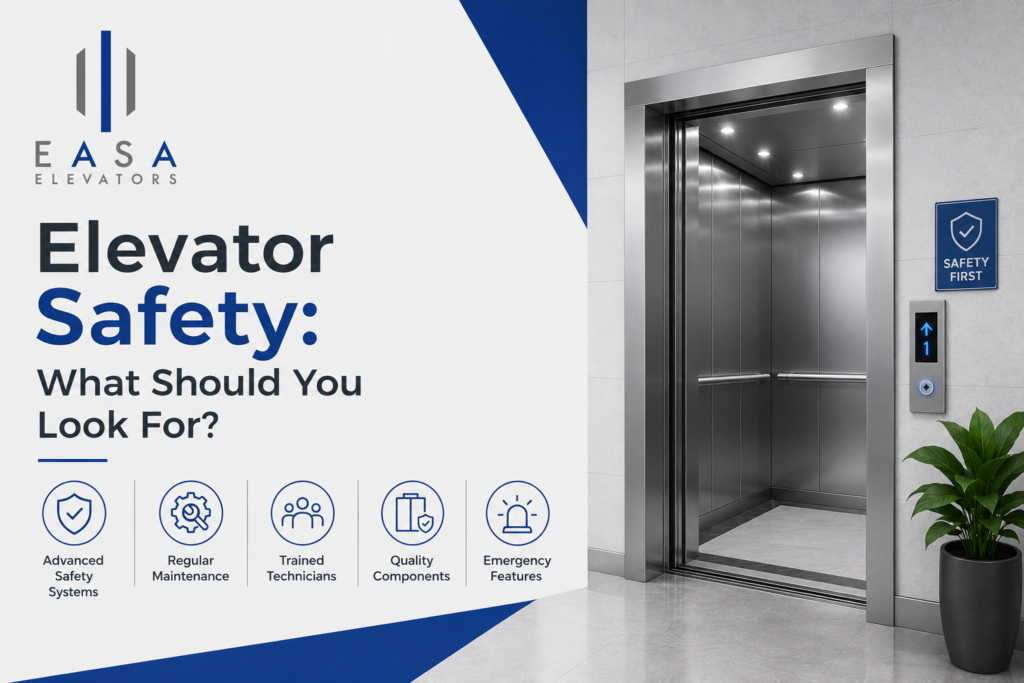
Elevator Safety: What Should You Look For?
Safety is a fundamental part of elevator design and operation.
Modern elevators incorporate multiple systems designed to help protect passengers and equipment during normal operation and in unexpected situations.
When evaluating an elevator, consider features such as:
- Reliable braking systems
- Door sensors and safety mechanisms
- Emergency alarms
- Emergency communication systems
- Overload protection
- Backup or automatic rescue systems where applicable
- Properly designed control systems
- Regular inspection and maintenance
However, safety does not depend only on the equipment itself. Proper installation, commissioning, periodic maintenance, and timely servicing are equally important.
Building owners and facility managers should work with qualified elevator professionals to ensure that the system continues to operate as intended.
Elevator Installation and Maintenance
Selecting the right elevator is only the beginning. Proper installation and ongoing maintenance are essential for reliable operation.
Elevator Installation
A professional elevator installation typically involves several stages, including:
- Site assessment
- Understanding structural requirements
- Evaluating shaft and access requirements
- Electrical planning
- Elevator installation
- Testing and commissioning
- Final checks before operation
Each project has its own structural and technical requirements, which is why an elevator should be selected after assessing the actual site conditions.
Elevator Maintenance
Regular maintenance helps keep an elevator operating smoothly and allows potential issues to be identified before they become major problems.
Maintenance can help:
- Reduce unexpected downtime
- Maintain smooth elevator operation
- Identify worn or faulty components
- Support passenger safety
- Extend equipment service life
- Maintain consistent performance
The required maintenance schedule can vary depending on the elevator type, usage, manufacturer recommendations, and applicable requirements.
Choosing Professional Elevator Services
Whether you are installing a new elevator or maintaining an existing system, professional support can make a significant difference.
A reliable elevator company can assist with different stages of the elevator lifecycle, including:
- Project consultation
- Site assessment
- Elevator design
- Installation
- Testing and commissioning
- Preventive maintenance
- Repairs
- Modernisation
- Component replacement
For property owners and businesses looking for elevator services in Delhi, it is important to evaluate the company’s engineering capabilities, service support, experience, and ability to provide solutions suited to the specific building.
Rather than selecting an elevator based only on initial cost, consider the complete lifecycle of the system, including installation, maintenance, energy use, safety, and long-term service requirements.
Why Choose EASA Elevators?
With more than 35 years of engineering experience, EASA Elevators focuses on providing elevator solutions designed around the requirements of modern buildings.
From residential projects to commercial applications, EASA combines engineering expertise with a focus on safety, comfort, functionality, and design.
The right elevator is not the same for every building. EASA works around factors such as building structure, usage, capacity, space availability, and project requirements to help determine a suitable elevator solution.
Whether you are planning a home elevator, passenger elevator, or another specialised elevator system, professional guidance can help you make a more informed decision.
Frequently Asked Questions About Elevators
What is an elevator?
An elevator is a vertical transportation system used to move people or goods between different floors of a building.
What are the different types of elevators?
Common types include passenger elevators, home elevators, dumbwaiter elevators, hospital elevators, goods elevators, and other specialised systems designed for specific applications.
What is a home elevator?
A home elevator is designed for residential properties such as houses and villas. It provides convenient movement between floors and can be selected according to the home’s space, design, and usage requirements.
What is a passenger elevator?
A passenger elevator is designed primarily to transport people between floors. It is commonly used in residential, commercial, hospitality, healthcare, and public buildings.
What is a dumbwaiter elevator used for?
A dumbwaiter is designed to move smaller goods or materials between floors. It is commonly used in restaurants, hotels, hospitals, commercial kitchens, offices, and large residences.
How do I choose the right elevator?
Consider the building type, number of floors, passenger or load capacity, available space, expected usage, speed requirements, safety features, design requirements, and maintenance needs.
Are elevators safe?
Modern elevators are equipped with multiple safety mechanisms. However, proper installation, regular maintenance, inspection, and timely servicing are essential for safe and reliable operation.
How often should an elevator be maintained?
Maintenance requirements depend on factors such as the elevator type, usage, manufacturer recommendations, and applicable regulations. A professional maintenance schedule should be established for each elevator system.
Conclusion
An elevator is an important part of any multi-storey building, providing convenient and efficient vertical transportation while improving accessibility and functionality.
From a home elevator designed for a private residence to a passenger elevator serving a busy commercial building or a dumbwaiter elevator used for transporting goods, each solution has a specific purpose.
The right elevator should be selected by considering the building’s structure, usage, capacity, available space, safety requirements, design, and long-term maintenance needs.
With the right engineering partner, elevator selection, installation, and maintenance can become a more straightforward process.
Looking for an elevator solution for your residential or commercial project? Connect with EASA Elevators to discuss your requirements and find a solution designed around your building.