Life Happens in an Elevator in an Elevator in an Elevator

- Home
- About Us
- Products/Services
By Industry
Service & Modernisation
- Architects & Designers
- By Industry
- Blogs
- Contact Us
Top Elevator Companies in India: How to Choose the Right Elevator Partner
As commercial and industrial spaces continue to expand across India, choosing the right vertical transportation system has become a critical decision for building owners, warehouse managers, and facility planners. Two of the most commonly used systems are the freight elevator and the passenger elevator — but they are built for very different purposes.
Understanding the difference between goods lift and passenger lift can help you avoid costly mistakes, ensure safety compliance, and select a system that actually matches how your building operates. In this guide, we break down freight elevator vs passenger elevator differences, load capacity considerations, and how to decide which elevator for warehouse or commercial use is right for you.
What Is a Passenger Elevator?
A passenger elevator is designed primarily to transport people safely and comfortably between floors. These are commonly used in:
- Office buildings
- Residential complexes
- Hotels
- Hospitals
- Shopping centres
- Commercial complexes
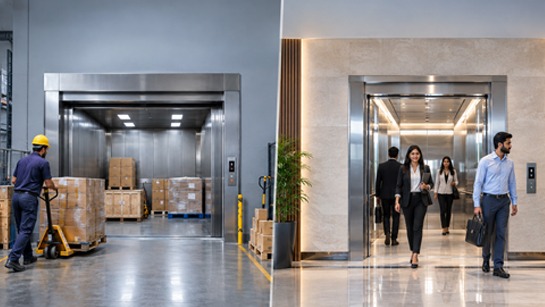
Passenger elevators focus on comfort, speed, and interior finish — smooth rides, quick door cycles, and aesthetically designed cabins are priorities, since these elevators are used repeatedly by the public throughout the day.
What Is a Freight Elevator?
A freight elevator (also known as a goods lift or cargo lift) is engineered to move heavy loads, equipment, raw materials, or bulk goods between floors, rather than people. Freight elevators are typically found in:
- Warehouses
- Factories and manufacturing units
- Logistics and distribution centres
- Retail backrooms and stockrooms
- Industrial facilities
Unlike passenger elevators, freight elevators are built with reinforced flooring, larger cabin dimensions, tougher doors, and higher load-bearing components, since they are meant to handle continuous heavy-duty use rather than passenger comfort.
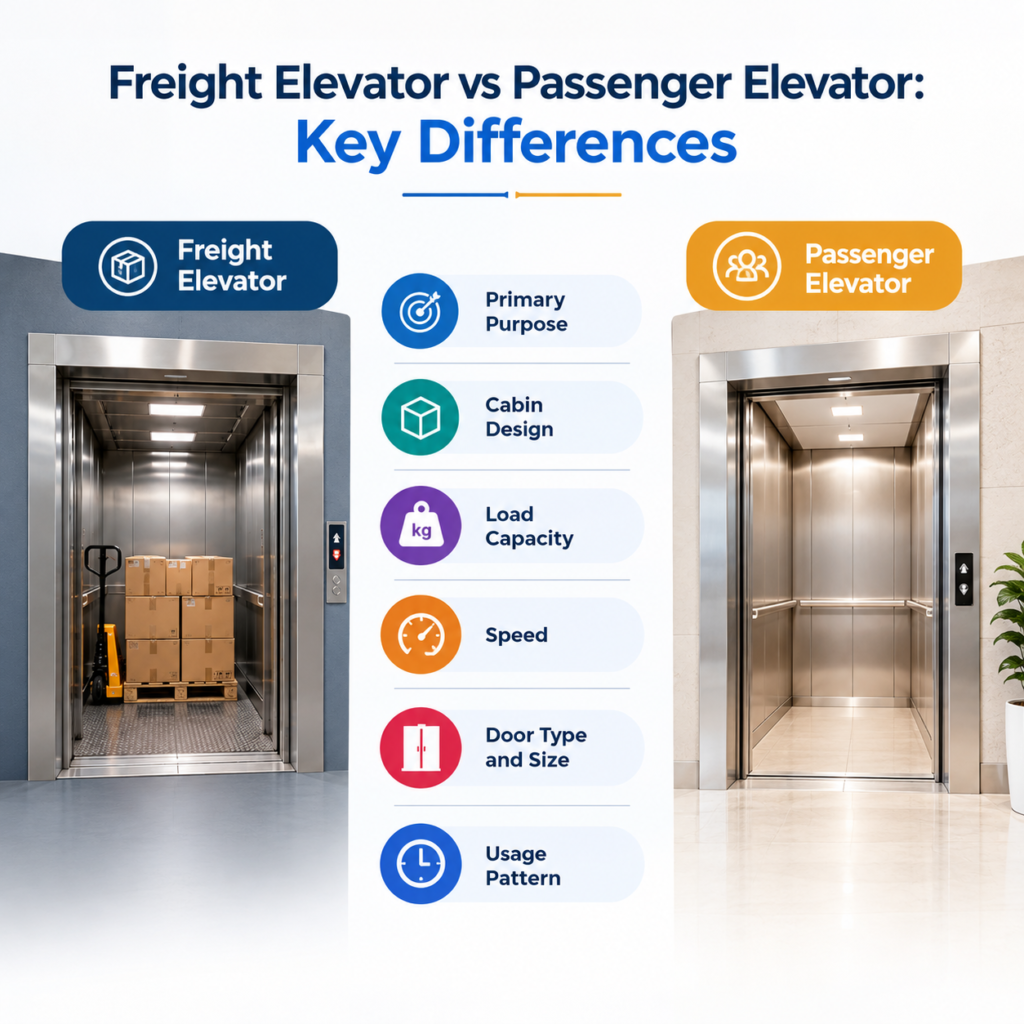
Freight Elevator vs Passenger Elevator: Key Differences
While both systems move loads vertically, the engineering and purpose behind them are quite different.
1. Primary Purpose
Passenger elevators are designed for people; freight elevators are designed for goods, machinery, and bulk materials.
2. Cabin Design
Passenger lifts have finished interiors — flooring, lighting, mirrors, and control panels designed for comfort. Freight elevators have utilitarian interiors built for durability, with reinforced walls and flooring that can withstand impact from trolleys, pallets, or equipment.
5. Door Type and Size
Freight elevators typically use wider, taller doors (often vertical bi-parting or heavy-duty sliding doors) to accommodate large equipment, pallets, or trolleys. Passenger elevator doors are sized for people, not machinery.
3. Load Capacity
This is one of the biggest differences between the two systems, and one of the most important factors when selecting an elevator.
4. Speed
Passenger elevators are generally faster, since quick, frequent trips matter more than raw load. Freight elevators usually run slower, prioritising stability and safety over speed.
6. Usage Pattern
Passenger lifts see frequent, short-duration trips throughout the day. Freight elevators are used less frequently but carry significantly heavier and bulkier loads per trip.
Freight Elevator Load Capacity: What You Should Know
Freight elevator load capacity is one of the most important specifications to evaluate before installation, since it directly affects safety and operational efficiency.
Key factors that influence load capacity requirements include:
- The maximum weight of goods, equipment, or materials being transported
- Whether loads are manually handled or moved using trolleys, forklifts, or pallet jacks
- The frequency of use and expected daily load cycles
- The size and dimensions of the goods being transported (not just weight)
- Structural and shaft specifications of the building
Freight elevators are generally built to handle significantly higher loads than passenger elevators, since they are engineered around heavy-duty structural components, reinforced flooring, and stronger hoisting mechanisms. The right load capacity should always be determined based on an assessment of actual operational needs — under-specifying a freight elevator can lead to safety risks and frequent breakdowns, while over-specifying can add unnecessary cost.
Passenger Lift vs Cargo Lift: Can One Replace the Other?
A common question facility managers ask is whether a passenger lift vs cargo lift decision can go either way — for example, using a passenger elevator to occasionally move goods, or a freight elevator to occasionally move people.
In practice, this is not advisable:
- Passenger elevators are not built to handle heavy or bulky freight. Repeatedly using them for goods movement can cause premature wear, flooring damage, and safety hazards.
- Freight elevators, while structurally capable of carrying people in certain configurations, are typically not designed with the same passenger-focused safety and comfort features, and their use for passenger transport should follow proper certification and safety guidelines.
The safest and most efficient approach is to install the elevator type that matches your building’s actual operational needs — and in many industrial or mixed-use facilities, that means installing both.
Which Elevator for Warehouse Use?
Warehouses present a specific set of requirements that differ from office buildings or residential properties. When evaluating which elevator for warehouse operations, consider:
1. Type and Weight of Goods
Warehouses handling palletised goods, machinery, or bulk inventory generally require a freight elevator with a higher load capacity rather than a passenger-style lift.
3. Frequency of Use
High-frequency goods movement across multiple floors calls for a freight elevator engineered for continuous heavy-duty operation.
5. Building Layout and Shaft Availability
Available space, shaft dimensions, and structural considerations will influence whether a freight elevator, passenger elevator, or both can be accommodated.
For most warehouses and industrial facilities, a dedicated freight elevator — sized and rated according to actual load requirements — is the more practical and safer long-term solution.
2. Movement of Equipment
If forklifts, trolleys, or pallet jacks need to move directly in and out of the elevator, cabin dimensions and door width become critical factors.
4. Staff and Visitor Movement
If the warehouse also has office areas, staff facilities, or visitor access on upper floors, a separate passenger elevator may be required alongside the freight elevator.
Commercial Lift Types Explained
Beyond freight and passenger elevators, several other lift types are commonly used across commercial and industrial settings. Here’s a quick overview of commercial lift types explained:
- Passenger Elevators – for transporting people in offices, hotels, hospitals, and commercial buildings.
- Freight/Goods Elevators – for transporting heavy materials, equipment, and bulk goods in warehouses and factories.
- Dumbwaiter Elevators – compact lifts for moving smaller items such as food, documents, or supplies between floors, commonly used in restaurants, hotels, and hospitals.
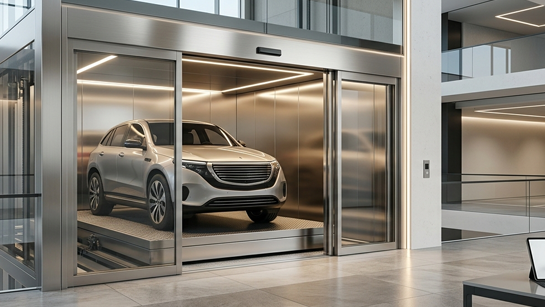
- Automobile Elevators – used for vertical parking solutions in space-constrained buildings.
- Hospital/Stretcher Elevators – designed for stretchers, wheelchairs, and medical equipment, with larger cabins and specific safety features.
- Special Purpose Elevators – customised solutions built for specific industrial or commercial requirements.
Choosing the correct lift type — rather than assuming one elevator can serve every purpose — is essential for safety, efficiency, and long-term cost savings.
Why Choose EASA Elevators?
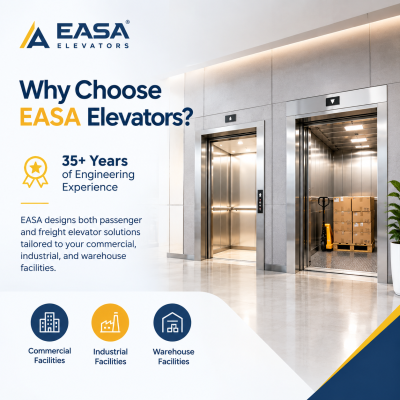
With more than 35 years of engineering experience, EASA Elevators designs both passenger and freight elevator solutions tailored to the specific requirements of commercial, industrial, and warehouse facilities.
Whether you need a high-capacity freight elevator for a warehouse, a passenger elevator for an office building, or a combination of both, EASA works closely with building owners and facility managers to assess load requirements, space constraints, and operational needs before recommending a solution.
Frequently Asked Questions
What is the main difference between a freight elevator and a passenger elevator?
A passenger elevator is designed to transport people comfortably, while a freight elevator is built to carry heavy goods, machinery, or bulk materials, with reinforced flooring and higher load capacity.
What is the difference between a goods lift and a passenger lift?
A goods lift (freight elevator) prioritises load capacity, durability, and cabin space for equipment, while a passenger lift prioritises comfort, speed, and interior finish for people.
How much weight can a freight elevator carry?
Freight elevator load capacity depends on factors like the building’s structural specifications, expected usage, and the type of goods being transported. Capacity should always be determined through a proper site and operational assessment.
Can a passenger lift be used as a cargo lift?
Passenger lifts are not designed to regularly carry heavy freight and doing so can cause damage or safety issues. A dedicated freight or cargo lift is recommended for goods movement.
Which elevator is best for a warehouse?
Most warehouses require a freight elevator with a load capacity matched to the type and weight of goods being handled, along with cabin dimensions suited to trolleys, pallets, or forklifts.
What are the different types of commercial lifts?
Common commercial lift types include passenger elevators, freight/goods elevators, dumbwaiters, automobile elevators, hospital/stretcher elevators, and special purpose elevators.
Planning a warehouse or commercial project and unsure which elevator suits your building? Connect with EASA Elevators to assess your requirements and find the right solution.