Life Happens in an Elevator in an Elevator in an Elevator

- Home
- About Us
- Products/Services
By Industry
Service & Modernisation
- Architects & Designers
- By Industry
- Blogs
- Contact Us
Different Types of Elevator Doors and Their Applications in Modern Buildings
Elevators have become an essential part of modern buildings, making vertical transportation easier, faster, and more convenient. From residential apartments and commercial complexes to hospitals and shopping malls, elevators are designed to meet different transportation requirements. While the elevator’s motor, cabin, and control system play important roles, its door mechanism is equally important for passenger safety, accessibility, and smooth operation.
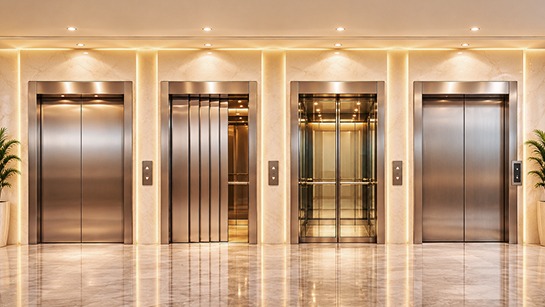
There are several elevator door types, each designed for specific building requirements and usage. Understanding the different types of elevator doors helps architects, builders, and property owners choose the right option for their projects. Let’s explore the most common elevator door types and their applications in modern buildings.
1. Automatic Elevator Doors
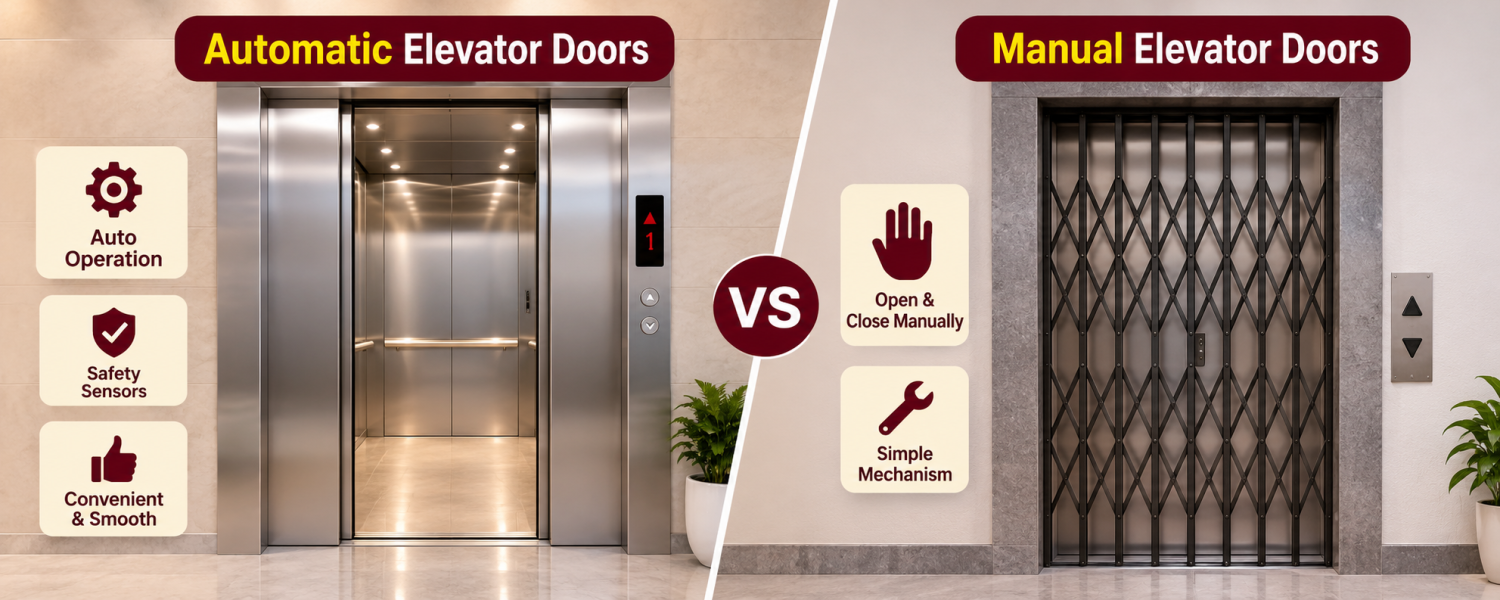
Automatic elevator doors are among the most commonly used options in modern buildings. These doors open and close automatically when the elevator reaches a particular floor. They operate through an electric motor and an automatic control system, reducing the need for manual operation.
These doors often include safety sensors that detect passengers or objects in their path, preventing accidental closure. Automatic elevator doors are widely used in residential apartments, corporate offices, hotels, hospitals, and shopping malls because they offer convenience, smooth operation, and improved passenger safety.
2. Manual Elevator Doors
Manual elevator doors require passengers or operators to open and close them manually. Unlike automatic systems, these doors do not depend on an electric motor for their opening and closing mechanism.
They are generally found in older elevator systems, smaller buildings, and certain industrial applications. Manual elevator doors can be a practical option where elevator usage is limited or where a simpler door mechanism is preferred. However, proper operation and maintenance are important to ensure passenger safety.
3. Sliding Elevator Doors
Sliding elevator doors operate by moving horizontally along a track rather than swinging outward or inward. They are available in single-slide and centre-opening configurations, depending on the elevator design and available space.
These doors are commonly used in modern residential and commercial elevators because they provide smooth operation and efficient space utilisation. Sliding elevator doors are particularly suitable for buildings with frequent passenger movement, as their automatic mechanism allows quick and convenient entry and exit.
4. Elevator Landing Doors
Elevator landing doors are installed at each floor of a building, providing access to the elevator shaft. They remain closed when the elevator is not present at a particular floor and open only when the elevator cabin arrives and is properly aligned.
These doors are an essential safety component because they prevent people from accidentally entering the elevator shaft. Elevator landing doors are commonly used in residential towers, office buildings, hospitals, hotels, and commercial complexes.
Depending on the elevator design, landing doors can be automatic or manually operated. They are generally equipped with safety interlocks that prevent elevator movement when the doors are not properly secured.
5. Centre-Opening and Side-Opening Elevator Doors
Apart from their operating mechanisms, elevator doors can also be classified according to how their panels move.
Centre-opening doors: These doors consist of two panels that slide in opposite directions from the centre. They provide a wider entrance and are commonly used in commercial buildings, hospitals, and high-traffic areas.
Side-opening doors: These doors generally consist of one or more panels that slide towards one side. They are useful where the available cabin space or building layout requires a side-opening arrangement.
Both configurations are available in different designs and can be selected according to the elevator’s capacity, entrance width, and building requirements.
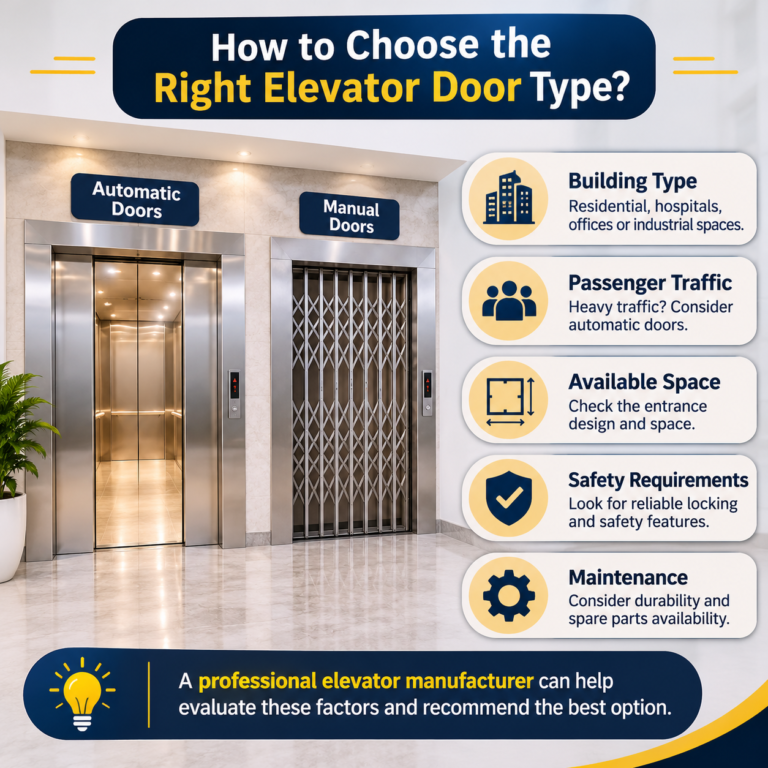
How to Choose the Right Elevator Door Type?
Selecting the right elevator door is important for ensuring convenience, safety, and efficient operation. Before making a decision, consider the following factors:
- Building Type: Residential buildings, hospitals, offices, and industrial facilities may require different door configurations.
- Passenger Traffic: Buildings with heavy passenger movement generally benefit from automatic sliding doors.
- Available Space: The entrance design and surrounding space influence the choice of door mechanism.
- Safety Requirements: Look for reliable locking systems, safety interlocks, and obstruction detection features.
- Maintenance: Consider the durability, availability of spare parts, and maintenance requirements of the door system.
A professional elevator manufacturer can help evaluate these factors and recommend a suitable configuration for the building.
Why Choose EASA Elevators for Your Elevator Requirements?
Choosing the right elevator company is just as important as selecting the appropriate door mechanism. EASA Elevators offers a range of elevator solutions designed for different residential, commercial, and industrial requirements.
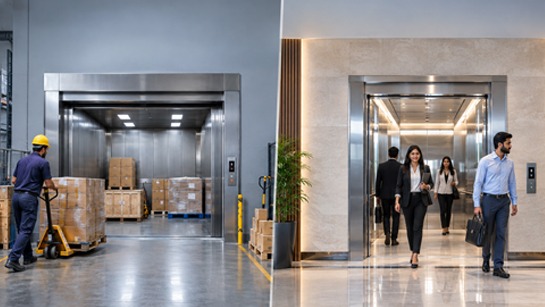
From home elevators and passenger elevators to hospital elevators, freight elevators, automobile elevators, and dumbwaiters, EASA Elevators deals in different types of elevators to serve diverse applications. Its elevator solutions focus on safety, functionality, performance, and modern design.
Whether you are planning a new residential project, upgrading a commercial property, or looking for an industrial lifting solution, EASA Elevators can help you explore suitable options according to your project requirements.
Visit EASA Elevators to learn more about its elevator solutions.
Conclusion
Different elevator door types serve different purposes in modern buildings. Automatic elevator doors offer convenience, manual doors provide a simpler operating mechanism, sliding doors help optimise entrance space, and landing doors provide an essential safety barrier between the elevator cabin and building floors.
Understanding these options makes it easier to select an elevator door system that matches the building’s design, usage, and safety requirements. With a suitable elevator solution from EASA Elevators, building owners can improve accessibility and ensure convenient vertical transportation.